
Wednesday, December 2, 2015
Floating Mountain

Personal Logo

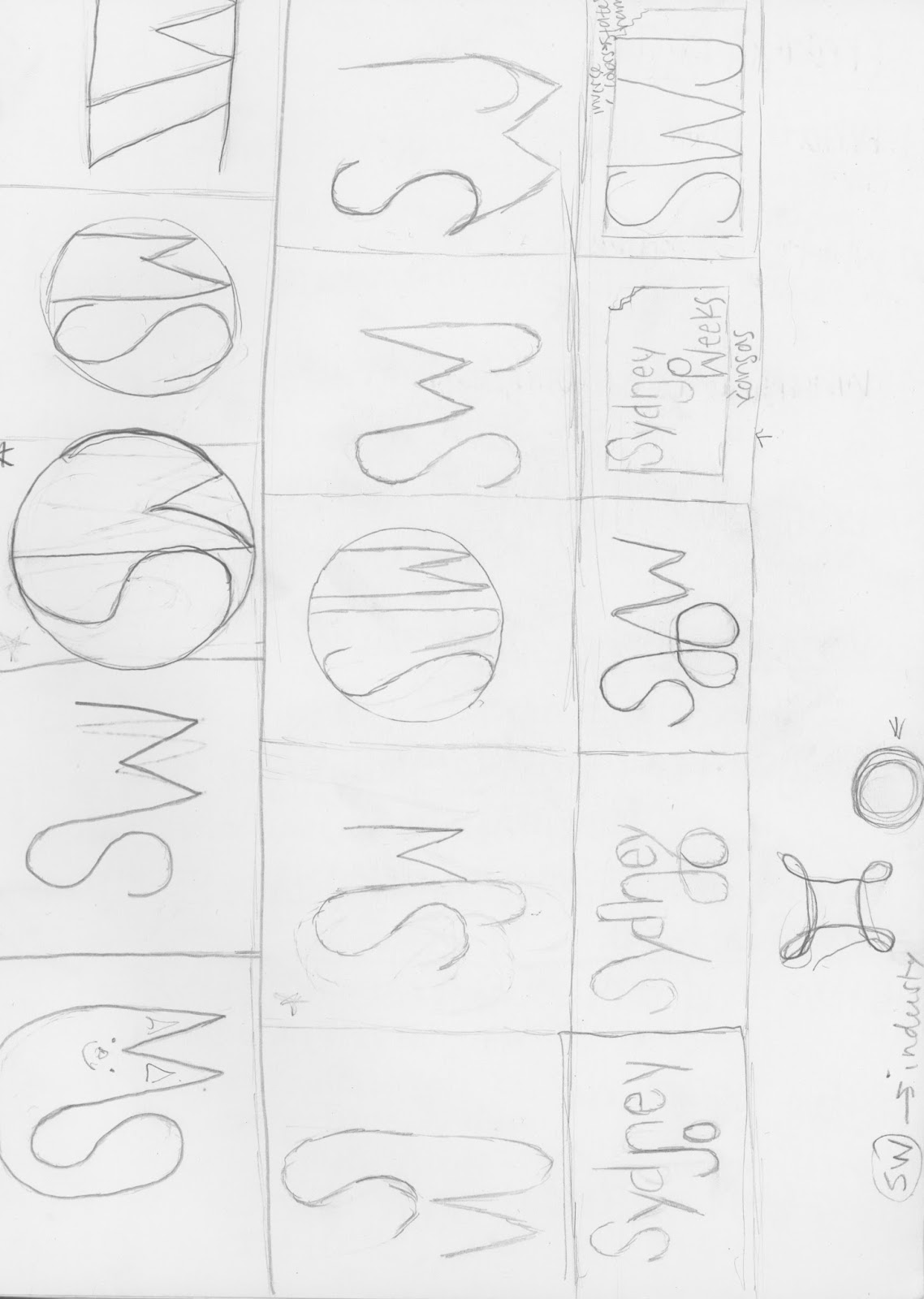


 Previously in Graphic Design we were allowed to create a personal logo that represented who we are and our personalities. While it was really fun and interesting to go through the process it was also complicated to get the shapes square and exactly where you wanted them. These pictures (in order of when created) is the thought process that I went through after I created 15 ideas for a logo.
The first thing we had to do was create 15 sketches of 3 different logos we were thinking of. After we did those we started putting our favorite ideas into Illustrator. I chose to incorporate my initials into a circle because a circle represents organization and I am a very organized person. Then I changed the colors and added design elements to make it more appealing. Once I had the shape I liked for sure, I made the colors more subtle and added a wordmark for business cards or notepads. The font that I found to use for my wordmark was Eryx Rennie Macintosh.
During this project we had to ask each other for help to see if our logo would appeal to others and I think I did a really good job about collaborating and communicating with others' and Mrs. Lofquist about things I could improve on and things that I should keep the same.
Wednesday, November 25, 2015
A Drip of Life
This past week in e-Comm we have been doing a live coverage story on our Student Council's annual Blood Drive. Our goal was to shoot some B-Roll of the event while also interviewing either a phlebotomist, a donor, or a STUCO member helping out.
Wednesday, November 11, 2015
Saving Lives One Drop at a Time
The scope of this project was to emphasize the blood drive in a Michigan high school specifically for a previous breast cancer survivor. They wanted to explain what their goal was when doing a blood drive, especially for breast cancer.
This video did a really good job about posing their shots, both in interviews and for the B-Roll. Another component they executed well was their B-Roll, they made sure to get plenty of different angled shots whether it be of the patients, the organizer, or the phlebotomists. They also used the 6-Shot-Sequence, the Rule of 1/3, a stable base for each shot, and well-rounded audio.
I could use a lot of the things used in this video like the different shots and set-ups of interviews and the B-Roll. Also, the angle the story was told in is a really good concept I could use. They made their angle specific to certain people so if I could find an individual story, that's what I could base my video off of.
Overall, I thought this video was very well put together between the actual video and the audio over the top. I will definitely use this video as a reference for my upcoming story.
This video did a really good job about posing their shots, both in interviews and for the B-Roll. Another component they executed well was their B-Roll, they made sure to get plenty of different angled shots whether it be of the patients, the organizer, or the phlebotomists. They also used the 6-Shot-Sequence, the Rule of 1/3, a stable base for each shot, and well-rounded audio.
I could use a lot of the things used in this video like the different shots and set-ups of interviews and the B-Roll. Also, the angle the story was told in is a really good concept I could use. They made their angle specific to certain people so if I could find an individual story, that's what I could base my video off of.
Overall, I thought this video was very well put together between the actual video and the audio over the top. I will definitely use this video as a reference for my upcoming story.
Friday, November 6, 2015
ONW NOW Video
This project we did in class was to familiarize ourselves with having to use B-Roll and interviews in the same video to create a whole story. My video in particular was over ONW Sophomore Thomas Barnes and his incredible talent to be able to compose music. It was really interesting to be able to see what he does to get into his composing zone.
First I had to go in and get actual footage of him playing and composing music. After that I got to create my story which personally is my favorite because I get to make my own delayed and summary leads and the voice-overs in between. After we created our scripts we started to organize our clips by favoriting and keywording them so we knew which videos to use. During this we also did our voice-overs then started to actually put things on our timelines. Once we got things on we would just morph them all to make sure they transitioned well into one another and that there weren't any jump cuts.
I've learned a lot of things during this project such as how to get B-Roll for certain activities, what types of shots to use, how to use a title for an interview, and also how to use the J and L to cover up different cuts.
If I were to do anything different I would make sure that I white-balanced my camera every time I was in new lighting or location. I would also get more B-Roll of him composing and playing different things.
Other than those things I am very happy with how my video turned out and am looking forward to learning more things in AV class this year and to make more and more videos.
Wednesday, October 28, 2015
Professional Article Review: Creative Anarchy at Its Very Best
This article was about what it takes to embrace creative anarchy. It explains that rules are meant to be broken but you have to know them first. Also, that there are many problems that occur in design but the thing is that there are even more solutions to them. Finally, the article explains that it's okay to take risks and divert from the conformism of others. In this article, the author Denise Bosler tries to explain that it's okay, and many times needed, to break the rules.
Design has many different components that make it as creative as possible. One of these being rules which are needed in order for us to be able to do what we need to. While they are very important to help us stay on track, it also is important to break them at some points. They provide guidelines and basic information to make creative pieces but also can block us from being truly creative in our own ways. Design is something that needs to be pushed and so does our own creativity.
This is especially true when there are problems with the pieces you're trying to create. "Every design problem has multiple solutions," as said by Denise Bosler. Even problems need to happen in order to succeed. Design does not have shortcuts; it's either do it fully or not at all. No matter what happens, we will always be learning new things whether they be new ideas we come up with, new solutions to a problem, new techniques, or new rules. There is no way to escape rules, but there are many ways to break them. The key is to break them but in a way that it will benefit you instead of hurting you.
Denise did a great job about supporting her key ideas with a lot of detailed evidence. She also used good examples in order to further her opinion about what she believes is needed to be a successful designer. She could've worked on using less words but just as much detail to explain her main point so that it wasn't as confusing as she made it seem.
Design has many different components that make it as creative as possible. One of these being rules which are needed in order for us to be able to do what we need to. While they are very important to help us stay on track, it also is important to break them at some points. They provide guidelines and basic information to make creative pieces but also can block us from being truly creative in our own ways. Design is something that needs to be pushed and so does our own creativity.
This is especially true when there are problems with the pieces you're trying to create. "Every design problem has multiple solutions," as said by Denise Bosler. Even problems need to happen in order to succeed. Design does not have shortcuts; it's either do it fully or not at all. No matter what happens, we will always be learning new things whether they be new ideas we come up with, new solutions to a problem, new techniques, or new rules. There is no way to escape rules, but there are many ways to break them. The key is to break them but in a way that it will benefit you instead of hurting you.
Denise did a great job about supporting her key ideas with a lot of detailed evidence. She also used good examples in order to further her opinion about what she believes is needed to be a successful designer. She could've worked on using less words but just as much detail to explain her main point so that it wasn't as confusing as she made it seem.
Monday, October 5, 2015
Professional Article Review
This past Thursday in Roseburg, Oregon a gunman opened fire which killed at least nine and wounded at least seven at Umpqua Community College. One student was live tweeting about the travesty while it was occurring. Kayla Marie tweeted "Omg there's someone shooting on campus," at 12:41. This caused many reporters and TV producers to attempt to get into contact with Kayla to get as much information on the shooting as possible. While reporters were trying to interview her, some journalists considered the consequences of their actions and one even thought of them as "Absolute human vultures."
The author of this article is trying to say that journalists can be rude when attempting to interview others. They show this by including quotes, pictures, and videos of the president, bystanders, and people who were affected by the event. The author is very good at explaining the travesty and quotes that are included. They aren't very good at getting to the point as much as explaining it however. Their conclusions are that reporters and journalists can be evil when it comes to interviewing and getting information on important news.
This article explains the points the author is trying to convey very well by using exact tweets by Kayla Marie and Emmanuelle Saliba, quotes by other reporters from various news stations, and also pictures taken at the scene. The evidence convinced me that reporters can be conniving and rude when trying to interview others. The applications are the photographs taken and the speech recorded Barck Obama gave to the college. Overall, this article was put together very well to get the point across about reporters.
https://www.washingtonpost.com/lifestyle/style/vultures-or-reporters-after-shooting-witnesses-hit-with-media-requests/2015/10/01/c7c53a86-6871-11e5-9ef3-fde182507eac_story.html
The author of this article is trying to say that journalists can be rude when attempting to interview others. They show this by including quotes, pictures, and videos of the president, bystanders, and people who were affected by the event. The author is very good at explaining the travesty and quotes that are included. They aren't very good at getting to the point as much as explaining it however. Their conclusions are that reporters and journalists can be evil when it comes to interviewing and getting information on important news.
This article explains the points the author is trying to convey very well by using exact tweets by Kayla Marie and Emmanuelle Saliba, quotes by other reporters from various news stations, and also pictures taken at the scene. The evidence convinced me that reporters can be conniving and rude when trying to interview others. The applications are the photographs taken and the speech recorded Barck Obama gave to the college. Overall, this article was put together very well to get the point across about reporters.
https://www.washingtonpost.com/lifestyle/style/vultures-or-reporters-after-shooting-witnesses-hit-with-media-requests/2015/10/01/c7c53a86-6871-11e5-9ef3-fde182507eac_story.html
Subscribe to:
Posts (Atom)